
What is the difference between zirconium, ceramic, and aluminum oxide abrasives?
Choosing the right abrasive can be confusing. Using the wrong one wastes time, ruins your workpiece, and costs you money. Let’s make the choice simple for you.
The main difference lies in performance1 and cost. Aluminum oxide is a cost-effective2 choice for general use on wood and soft metals3. Zirconia is sharper and better for stainless steel and hardwoods. Ceramic is the sharpest and longest-lasting, ideal for tough alloys4 and maximum efficiency.
<sup id=](https://novogrit.com/wp-content/webp-express/webp-images/uploads/2025/11/choosing-the-right-abrasive-can-be-confusing-usin.png.webp)
These differences might seem small, but they have a huge impact on your work's speed, quality, and overall cost. You need to know which grain is right for your specific job to get the best results without overspending. So, how do you decide which one you really need? Let's dive deeper into each type.
When should I choose aluminum oxide5 abrasives?
Do you need to sand wood or regular metal on a tight budget7? The high cost of premium abrasives can eat into your profits. Here’s the most cost-effective2 solution for everyday jobs.
Choose aluminum oxide5 for its excellent value on general-purpose applications. It's the best abrasive for sanding softwoods, regular metals like iron and aluminum, and in situations where budget7 is a primary concern.
<sup id=](https://novogrit.com/wp-content/webp-express/webp-images/uploads/2025/11/choosing-the-right-abrasive-can-be-confusing-usin-3.png.webp)
In my 15 years in this business, I've learned that aluminum oxide5 is the true workhorse of the abrasives world. It gets the job done for most common tasks without breaking the bank. Think of it as the reliable tool you reach for every day. Its grains are tough and durable enough for materials like pine wood, aluminum, and basic carbon steel. The key advantage is its price. It offers great performance1 for its cost.
This is especially true for products made in China. We have mastered the production of high-quality aluminum oxide5 abrasives that offer incredible value. The performance1 is more than enough for most workshops, and the cost savings are significant. For general fabrication or woodworking, you often don't need anything more advanced.
Here's a simple breakdown:
| Feature | Aluminum Oxide |
|---|---|
| Best For | Softwood, regular metal, aluminum |
| Key Advantage | High cost-effective2ness, great value |
| Price Point | $ (Low) |
| Sharpness | Good |
| Durability | Moderate |
Is zirconia6 a better choice for hard materials?
Are you struggling to sand stainless steel or hardwood? Standard abrasives just don't cut it and wear out too quickly. There's a tougher abrasive that bridges the gap between cost and performance1.
Yes, zirconia6 is a much better choice for hard materials. Its sharp, durable grains are excellent for grinding stainless steel8 and hardwoods. It offers a longer life and faster cut than aluminum oxide5.
<sup id=](https://novogrit.com/wp-content/webp-express/webp-images/uploads/2025/11/choosing-the-right-abrasive-can-be-confusing-usin-2.png.webp)
When you move up to tougher materials, you need a tougher abrasive. This is where zirconia6 shines. I always recommend it for jobs involving stainless steel or very hard woods. Zirconia grains are different from aluminum oxide5. They are structured to be self-sharpening. As the grain wears down, small pieces break off, exposing new, sharp edges. This means it keeps cutting effectively for much longer, but it requires more pressure to work well.
From our factory's perspective, this is an area where we provide huge value. Top international brands for zirconia6 are excellent, but they are also very expensive. Our zirconia6 products from China deliver about 60-70% of that top-tier performance1 but at around 50% of the price. I have seen many customers in the automotive and furniture industries switch to our zirconia6 belts. They get the performance1 they need for hard materials and see their profit margins increase immediately.
Here is how zirconia6 compares:
| Feature | Zirconia |
|---|---|
| Best For | Stainless steel, hardwoods, heavy grinding |
| Key Advantage | High durability9 and sharpness10 for tough jobs |
| Price Point | $$ (Medium) |
| Sharpness | Very Good |
| Durability | High |
When does it make sense to pay for ceramic abrasives11?
Is maximum efficiency your top priority? When labor costs are high, slow sanding costs you more than just materials. You need the fastest, most aggressive abrasive available to save time.
Paying for ceramic abrasives11 makes sense when speed and performance1 are critical. For grinding tough alloys4 and in situations where labor costs are high, ceramic's exceptional cutting speed saves you time and money.

Ceramic is the king of abrasives. It is the most expensive, but for the right application, it is worth every penny. It is made of micro-crystalline grains that are designed to fracture in a controlled way. This process constantly creates new, razor-sharp cutting points. The result is an abrasive that cuts faster and lasts longer than anything else, especially on very hard metals and alloys.
This is why we see a high demand for ceramic abrasives11 in markets like Europe, the United States, and South America. In these regions, labor costs are very high. If a worker can finish a job in half the time, the savings on labor far outweigh the higher cost of the abrasive disc or belt. It’s a simple business calculation. For large-scale manufacturing and high-production environments12, ceramic is the smartest choice. It boosts productivity, and that is what matters most.
Here is a quick look at ceramic:
| Feature | Ceramic |
|---|---|
| Best For | Hard alloys, high-production environments12 |
| Key Advantage | Maximum sharpness10, speed, and lifespan |
| Price Point | $$$ (High) |
| Sharpness | Exceptional |
| Durability | Very High |
Conclusion
Choose the right abrasive for your material and budget7. Use aluminum oxide5 for value, zirconia6 for tough jobs, and ceramic for ultimate efficiency. This choice directly impacts your bottom line.
---Learn about the performance differences among aluminum oxide, zirconia, and ceramic abrasives. ↩
Find out about affordable abrasive solutions that don't compromise on quality. ↩
Learn which abrasives work best for sanding soft metals without damaging them. ↩
Explore the top abrasives for working with tough alloys and achieving superior results. ↩
Explore the advantages of aluminum oxide abrasives for cost-effective and reliable sanding solutions. ↩
Learn why zirconia abrasives are ideal for tough materials like stainless steel and hardwood. ↩
Get tips on selecting the right abrasives that fit your budget without sacrificing quality. ↩
Find the most effective abrasives for grinding stainless steel and achieving optimal results. ↩
Explore the durability of various abrasives to choose the right one for your projects. ↩
Understand the importance of sharpness in abrasives and how it impacts your work. ↩
Discover how ceramic abrasives can enhance productivity and reduce labor costs in manufacturing. ↩
Discover the best abrasives for maximizing efficiency in high-production settings. ↩

You may also be interested in:

Best Sandpaper for Aluminum: NOVOGRIT's Guide to Flawless Finishes
What is the Best Type of Sandpaper to Use on Aluminum? Do you find yourself frustrated by sandpaper that gums up instantly when you try to smooth aluminum? It is
Best Sandpaper for Paint Removal: Grits, Types, & Tips | NOVOGRIT
What is the Best Sandpaper for Removing Paint? Are you tired of staring at chipped, peeling paint on your furniture, walls, or even your car? It's a common problem, and
Automotive Wet Sanding: Supplies, Liquids & Best Sandpaper
Automotive Wet Sanding Supplies: What Do You Really Need? Wet sanding is a crucial technique in automotive refinishing, used to achieve a flawlessly smooth surface before painting or polishing. Unlike
Best Sandpaper for Paint Removal & Grit Guide
What Is the Best Sandpaper for Removing Paint? Removing old paint can be a tedious job, but using the right sandpaper makes all the difference. It's not just about grit;
Hardwood Floor Sanding: Screen vs. Sandpaper & Best Practices
Sanding Screen vs. Sandpaper for Hardwood Floors: Which is Best? When you're tackling hardwood floor projects, choosing the right abrasive is crucial for achieving a smooth, professional finish. Both sanding
Paper Backing vs. Mesh Sanding Discs: Which Abrasive to Choose?
Paper Back vs. Mesh Sanding Discs: Which One Should You Pick? Choosing the right sanding disc backing can significantly impact your project's efficiency and finish quality. Paper-backed discs are a
Sanding Mesh vs Paper: Which is More Economical and Better?
Is Sanding Mesh More Economical Than Sandpaper? Comparing Abrasive Costs When stocking up on abrasives, cost is always a factor. Paper sandpaper has traditionally been the standard, but newer mesh
Sanding Nets & Screens Use Cases: When to Choose Mesh Abrasives
Sanding Nets and Screens: What Are Their Best Use Cases? When you encounter sanding nets or screens, you might wonder where they fit into your sanding projects. Unlike traditional solid-backed
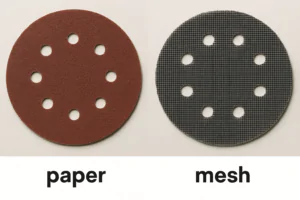
Paper vs. Mesh Sanding Discs: Which Abrasive to Choose?
Paper vs. Mesh Sanding Discs: Which Should You Buy? Choosing the right abrasive disc is essential for efficient and effective sanding. Two primary types dominate the market: traditional paper-backed discs
